Keynote Speakers
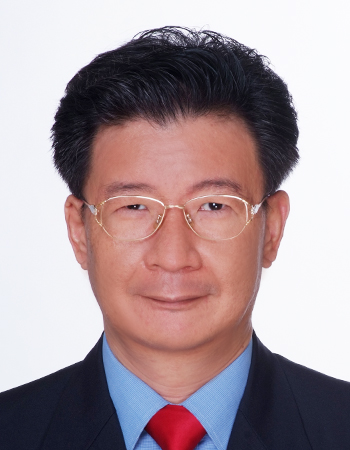
Prof. Xudong Jiang (IEEE Fellow), Nanyang Technological University, Singapore
Xudong Jiang received the B.Eng. and M.Eng. from the University of Electronic Science and Technology of China (UESTC), and the Ph.D. degree from Helmut Schmidt University, Hamburg, Germany. From 1986 to 1993, he was a Lecturer with UESTC, where he received two Science and Technology Awards from the Ministry for Electronic Industry of China. From 1998 to 2004, he was with the Institute for Infocomm Research, A-Star, Singapore, as a Lead Scientist and the Head of the Biometrics Laboratory, where he developed a system that achieved the most efficiency and the second most accuracy at the International Fingerprint Verification Competition in 2000. He joined Nanyang Technological University (NTU), Singapore, as a Faculty Member, in 2004, and served as the Director of the Centre for Information Security from 2005 to 2011. Currently, he is a professor in NTU. Dr Jiang holds 7 patents and has authored over 200 papers with 2 papers in Nature Communications, 20 papers in Pattern Recognition and over 40+ papers in the IEEE journals, including 6 papers in IEEE Transactions on Pattern Analysis and Machine Intelligence and 14 papers in IEEE Transactions on Image Processing. Four of his papers have been listed as the top 1% highly cited papers in the academic field of Engineering by Essential Science Indicators. He served as IFS TC Member of the IEEE Signal Processing Society from 2015 to 2017, Associate Editor for IEEE Signal Processing Letter from 2014 to 2018, Associate Editor for IEEE Transactions on Image Processing from 2016 to 2020 and the founding editorial board member for IET Biometrics form 2012 to 2019. Dr Jiang is currently an IEEE Fellow and serves as Senior Area Editor for IEEE Transactions on Image Processing and Editor-in-Chief for IET Biometrics. His current research interests include image processing, pattern recognition, computer vision, machine learning, and biometrics.

Prof. Dan Zeng , Shanghai University, China
Zeng Dan, female, was born in 1982 in Hunan Province, China. She is currently a Professor at Shanghai University, serving as the Head of the Department of Communication Engineering. She is also a recipient of the National Leading Talent Program and a Distinguished Professor under the Ministry of Education’s Changjiang Scholars Program.
Her research interests lie in
computer vision, multimedia content analysis, and pattern
recognition, with a recent focus on intelligent perception of visual
targets in complex scenarios. Her work aims to address key technical
challenges in real-time perception of low-quality targets, exploring
novel methods for detection, recognition, and localization. She has
led and participated in major national and provincial projects
totaling over 80 million RMB. She was recognized as a Shanghai
Education System Model Worker in 2022, and received multiple
national awards including First Prize of the 2023 Shanghai Science
and Technology Progress Award (1st contributor), First Prize of the
2023 Teaching Achievement Award from the Chinese Association for
Artificial Intelligence (1st contributor), First Prize of the 2023
China Industry-University-Research Cooperation Innovation
Achievement Award (1st contributor), and First Prize of the 2022
Technical Progress Award from the China Society of Image and
Graphics (2nd contributor). She has led major technology
breakthroughs in fine-grained perception of large-scale, weak, and
time-varying targets under complex industrial conditions. These
efforts resulted in the development and deployment of critical
subsystems supporting real-time large-object measurement,
high-accuracy equipment calibration, precision manufacturing, and
dynamic monitoring of industrial environments. Her technologies have
been widely applied in domains such as metallurgy and aerospace,
significantly advancing intelligent manufacturing processes.
Specific industrial applications include high-precision 3D mapping
of blast furnaces, intelligent slab finishing, defect detection, and
integrated factory monitoring.
Prof. Zeng is also deeply committed to education. She is the chief
editor of a textbook on fundamental courses in her field and has
received the Second Prize in the National Young Faculty Teaching
Competition for Electronic Information Majors. She has actively
promoted the integration of industry and education, leading
collaborative education projects supported by the Ministry of
Education. Her teaching achievements have earned her the First Prize
in the National Teaching Achievement Awards of the Chinese
Association for Artificial Intelligence. For her outstanding
contributions to education, she has received multiple commendations
from the Shanghai Municipal Education Commission. Her work in
research, teaching, and public service has been featured in major
media outlets such as Wenhui Daily, Shanghai Science and Technology
News, and The Paper (Shangguan News).
Prof. Honggang ZHANG (IEEE Fellow, AAIA Fellow), Macau University of Science and Technology , China
Honggang Zhang (IEEE Fellow, AAIA
Fellow) is a Professor with the School of Computer Science and
Engineering, Macau University of Science and Technology (MUST),
Macau, China. Previously, he was a Professor with the Faculty of
Data Science, City University of Macau, Macau, China. He was the
founding Chief Managing Editor of Intelligent Computing, a Science
Partner Journal (SPJ), as well as a Professor with the College of
Information Science and Electronic Engineering, Zhejiang University,
China. He was an Honorary Visiting Professor with the University of
York, U.K., and an International Chair Professor of Excellence with
the Université Européenne de Bretagne (UEB) and Supélec, France. He
has coauthored and edited two books: Cognitive Communications:
Distributed Artificial Intelligence (DAI), Regulatory Policy &
Economics, Implementation (Wiley) and Green Communications:
Theoretical Fundamentals, Algorithms and Applications (CRC Press).
His research interests include cognitive radio and networks, machine
learning, artificial intelligence, semantic communications, green
communications, intelligent computing, and Internet of Intelligence
(IoI). He is a co-recipient of the 2021 IEEE Communications Society
Outstanding Paper Award and the 2021 IEEE Internet of Things Journal
Best Paper Award. He was the leading Guest Editor for the Special
Issues on Green Communications of the IEEE Communications Magazine.
He served as a Series Editor for the IEEE Communications Magazine
(Green Communications and Computing Networks Series) from 2015 to
2018 and the Chair of the Technical Committee on Cognitive Networks
of the IEEE Communications Society from 2011 to 2012. He is the
Associate Editor-in-Chief of China Communications.
|
Previous Keynote Speakers |
|
|
|
 |
 |
 |
 |
| Prof.
Jie Lu AO (IEEE Fellow, IFSA Fellow, Australian Laureate
Fellow) University of Technology Sydney, Australia |
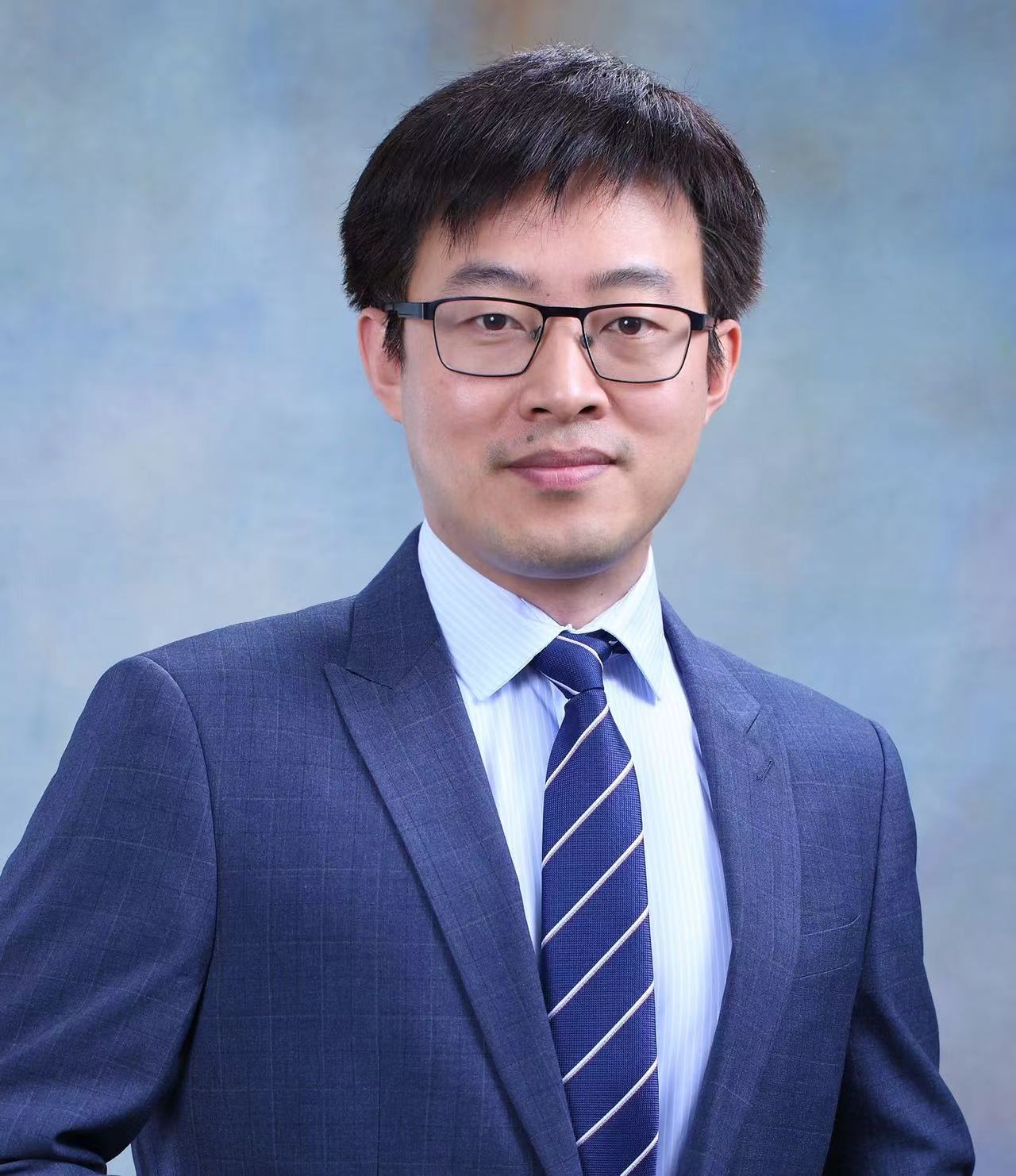
Prof. Haijun Zhang, University of Science and Technology Beijing, China (IEEE Fellow) | Prof. Haipeng Yao, Beijing University of Posts and Telecommunications, China (IET Fellow) | Prof. Tomoaki Otsuki, Keio University, Japan |
Copyright © 2025-2026. 2026 9th International Conference on Signal Processing and Machine Learning | All rights reserved